This story was originally published by CalMatters. Sign up for their newsletters.
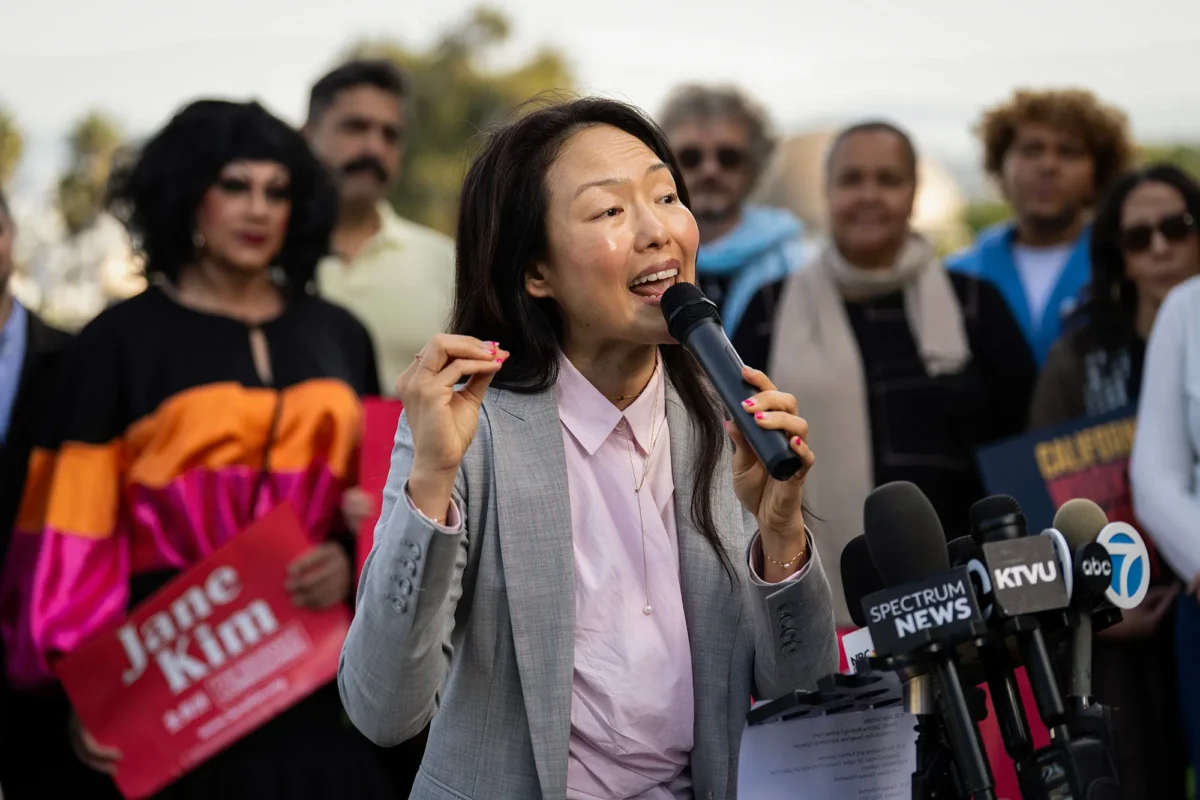
Jane Kim declared victory in the California insurance commissioner race on Friday, capping off what she called “the first unabashed and unapologetic populist progressive campaign.”
The former San Francisco supervisor is ahead of fellow Democrat state Sen. Ben Allen with 65% of ballots counted as of midday Friday, 53% to 47%.
“Everything in this campaign was about the ideas that we were putting forward, and whether you agree with them or not, the point is that we have ideas… and we’re going to explore all of them,” Kim said at a press conference in San Francisco, where she was joined by a fire survivor, labor leaders and others. “We plan to make insurance work for all of us,” she said.
A win by Kim, whose proposal to create a public wildfire insurance program resonated with voters around the state despite its many naysayers, would be the latest triumph in the progressive wave that’s sweeping the nation. U.S. Sen. Bernie Sanders and other progressives such as Ro Khanna, the Congressman from Silicon Valley, endorsed Kim, whose most recent job was director of the California Working Families Party.
“Jane had the message and the ground game,” Jorge Contreras, who succeeded Kim as director of the party, told CalMatters after the press conference. He called Kim’s win, as well as those of other candidates his party supported around the state, such as U.S. Rep.-elect Randy Villegas, historic.
Allen, who has termed out of the state Legislature, called Kim and congratulated her Friday morning. He said in a text message to CalMatters that he wishes Kim the best.
The commissioner heads the state’s Insurance Department, which regulates the nation’s largest insurance market that includes home, auto, life, pet, workers’ compensation and some types of health insurance. Kim will be the ninth person, and the first woman and Asian American, to hold the job since it became an elected position in 1988.
One of Kim’s immediate priorities will be addressing the availability and affordability of property insurance. Some insurers stopped renewing or writing new policies in California a few years ago, citing the increasing frequency and risk of catastrophic wildfires in the state. Current commissioner Ricardo Lara implemented new regulations that the insurance industry has embraced and is starting to show signs of working, though Kim has criticized the rising prices that have followed.
Almost half of the state’s residents report paying more for home or renters’ insurance than last year, according to a recent poll by the Insurance Fairness Project, a national insurance information hub, and Data for Progress.
Kim will also have to deal with the aftermath of the January 2025 fires in Los Angeles County. Many survivors of those fires are still trying to rebuild and recover, in part because of insurance delays and denials. Lara’s department has pending actions against State Farm, the biggest individual insurer in the state, and the last-resort FAIR Plan over their handling of claims from the Eaton and Palisades fires.
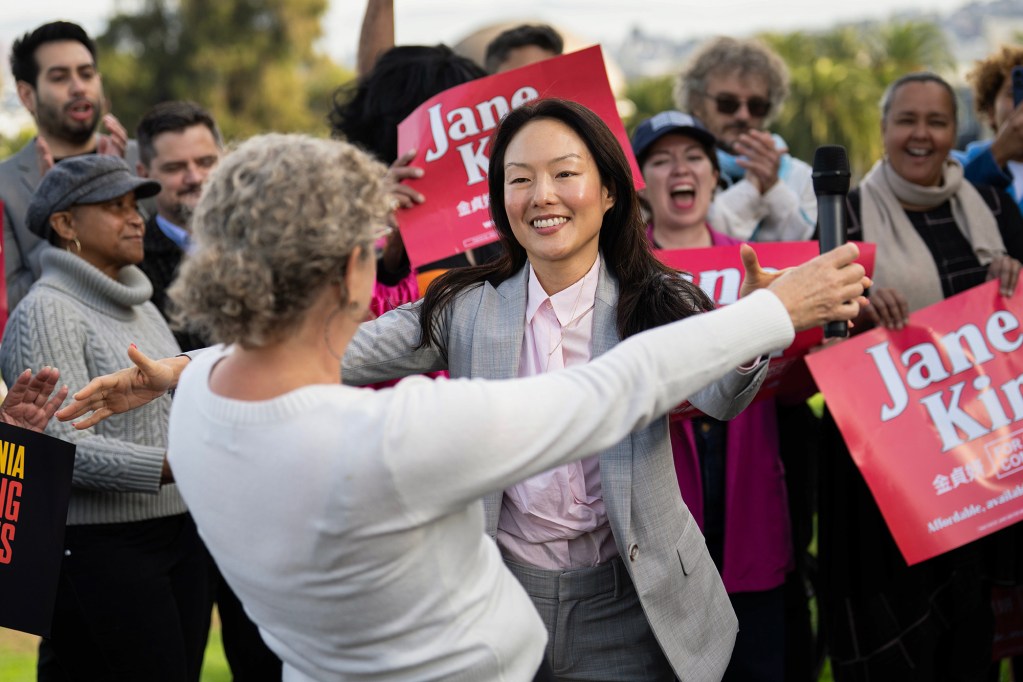
Amy Robinson, a survivor of the Glass Fire in 2020 that destroyed more than 1,500 structures in Napa and Sonoma counties, said at the press conference that she and her Sonoma County neighbors received more help from one another than they did from “the insurance industry that we paid into every month… the insurance process is supposed to be all about holding each other up in hard times.”
“This is what Jane is bringing into the heart of our state capital: big ideas, but mainly common sense and care,” Robinson said.
Kim’s plan to create a public program that would guarantee wildfire insurance after a major disaster, funded with what she envisions would be a portion of premiums that homeowners already pay their insurance companies, has plenty of critics.
Business interests spent millions of dollars supporting Kim’s opponent and opposing her candidacy. Allen was also endorsed by the Democratic Party and an array of labor and business advocacy groups, as well as environmental groups who liked his legislative record on climate-related issues.
Consumer Watchdog, a group whose founder wrote Proposition 103, which governs insurance law, plays a big role in insurance rate reviews — when the department reviews companies’ requests to raise their premiums.
“She’s got a big gun she’s going to point at the industry,” said Jamie Court, president of the group, referring to Kim’s tough talk about holding the insurance industry accountable. “I hope that brings them to the table to cover more people. It certainly will act as a check on prices.”
Kim has sharply criticized the state of the insurance market in California. She said before the election that she doesn’t “buy the narrative that the only option we have is to increase rates to keep these companies here.”
Moira Birss, a fellow with the Climate and Community Institute, a progressive think tank that has proposed public disaster insurance at the state and national levels, said she helped Kim’s campaign with its policy brief for the public insurance plan.
“Right now we are relying on black-box models the industry uses to price our policies without any of us, including the commissioner, having real insight into the metrics used to set premiums,” Birss told CalMatters. “It’s safe to assume they’re padding their profit.”
A nonprofit public plan would naturally come with cost savings, she said.
Kim knows that launching public disaster insurance is a tough, long-term goal that would need buy-in from the state Legislature and the governor. Those who have panned her plan, including Court, warn of tremendous risk to the state.
“It’s not a new concept,” said Rex Frazier, president of the Personal Insurance Federation of California, who said a public program has been proposed in the Legislature multiple times. There are a lot of details to think about, he said: “Will taxpayers be backstopping it? What happens if it runs out of money?”
The nonprofit public plan would build up its reserves over time, according to Kim’s policy brief. She also envisions that the program would invest premiums in wildfire mitigation, and that it would have one set of rules for faster recovery of claims after a major wildfire.
“We have to put up a new and different idea, because again, we’re being held hostage by the industry’s structure and narrative,” Kim said before the election.
This article was originally published on CalMatters and was republished under the Creative Commons Attribution-NonCommercial-NoDerivatives license.