Scholarship recipients (from left) Dr. Tania Zavalza Jimenez, Dr. Sayeh Akhavan and Dr. Xeng X. Xiong at a San Joaquin Valley Medical Scholarship Foundation awards ceremony.
Written by Vikaas Shanker
For retired surgeon Dr. Sergio Ilic, the physician shortage in the Central Valley stopped being an abstraction the day he had to use his own professional connections to find a primary care doctor for his daughter. Multiple physicians had turned her away — not enough room on their patient panels.
For Ilic, It wasn’t just a frustrating family experience. It was a stark reminder of a problem that has quietly deepened across the Central Valley: too few doctors, too many patients and too many young physicians carrying so much debt that practicing in underserved communities can feel financially out of reach.
Rather than simply lament the shortage, Ilic and a group of supporters built a program around one of its most stubborn causes.

Economic logic
The San Joaquin Valley Medical Scholarship Foundation provides new physicians with $55,000 a year for four years — $220,000 total — in exchange for a commitment to practice in underserved Valley communities and maintain a patient population that is at least 30% Medi-Cal or uninsured. The idea is straightforward: if debt is helping drive doctors away, reduce the debt and give them a reason to stay.
“Medical students graduate with debt that looks like a mortgage before they’ve even started their careers,” Ilic said. “If they want to go into primary care or open a practice in an underserved area, that becomes very difficult.”
The pressure is especially acute in family medicine and other primary care specialties, which often pay less than procedural or surgical fields. In the Valley, where many communities already struggle with poverty, Medi-Cal reliance and limited access to preventive care, the result is a health care gap that can be felt long before a patient ever reaches an emergency room.
Central Valley residents have 30% fewer primary care physicians than the statewide average, and about 85% of those residents live in primary care shortage areas, according to the Central Valley Health Care Landscape Study released by the Central Valley Community Foundation earlier this year.
Return on investment
Since awarding its first scholarship in 2022, the foundation has funded four physicians. For some of them, the support didn’t just ease financial stress — it helped shape the kind of medicine they felt empowered to practice.
Dr. Tania Zavalza Jimenez, a family physician and UCSF Fresno residency graduate, said she already intended to stay in the Valley. But the scholarship made it easier to pursue academic and community-based medicine, instead of feeling pulled toward higher-paying paths.
“It made it easier to choose the kind of work I wanted to do,” she said. “Family medicine is one of the lower-paid specialties, but we need many more primary care doctors in the Valley.”
Zavalza Jimenez, who is passionate about caring for underserved and Spanish-speaking populations, said the support helped make that mission more realistic.
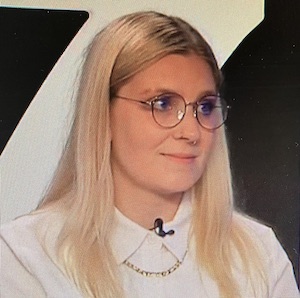
For Dr. Samantha Schmitz, who is completing her residency at UCSF Fresno, the scholarship reinforced her decision to stay in the region after training. Schmitz said she hopes to help open a clinic serving underserved and LGBTQ patients, and said the financial support has helped her focus on that goal rather than solely on loan repayment.
“This scholarship helped me focus on serving the community and staying in the community to work,” she said, “rather than looking for other ways to make ends meet.”
Gap between vision, capacity
The foundation’s long-term vision is significantly larger than four scholarships. Ilic said he would ultimately like to support 20 doctors per year, but the effort is currently limited by funding. The foundation is trying to raise $275,000 to award five additional scholarships in 2026 and is also looking for a donor to establish a large endowment to help sustain the program.
In the meantime, the foundation continues to rely on a mix of donor support, an existing $1 million endowment, and community fundraising, including events such as a pickleball tournament.
The physician shortage is often discussed in statistics: physician counts, patient ratios, hospital strain. But at ground level, it looks more personal than that: a family searching for a doctor, a clinic stretched thin, a young physician deciding whether they can afford to stay.
The scholarship fund is built around a simple proposition: in the Central Valley, keeping doctors may start with helping them stay in the first place.
Related Posts
-
 Visalia’s Hummus Republic closes after 5 years Posted: May 10, 2026 at 9:32 pm
A Visalia outpost of the Mediterranean fast-casual chain Hummus Republic
Read more » -
 Why We Showed Up: Local vendors on the business of giving back Posted: May 8, 2026 at 4:29 pm
Four vendors at FoodLink for Tulare County's inaugural Beats &
Read more » -
 BLOG: One hundred organizations can’t all be wrong Posted: at 3:21 pm
One hundred organizations just signed onto the Building an Affordable
Read more » -
 US stocks rise to records after a solid jobs report overshadows higher oil prices Posted: at 2:30 pm
The U.S. stock market rose to records Friday following the
Read more »
Central Valley Biz Blogs
-
BLOG: One hundred organizations can’t all be wrong
Posted: at 3:21 pm
One hundred organizations just signed onto the Building an Affordable
Read more » -
BLOG: Introducing the Philanthropy Excellence Awards, celebrating community impact
Posted: May 6, 2026 at 1:22 pm
At The Business Journal, storytelling has always been at the heart
Read more »