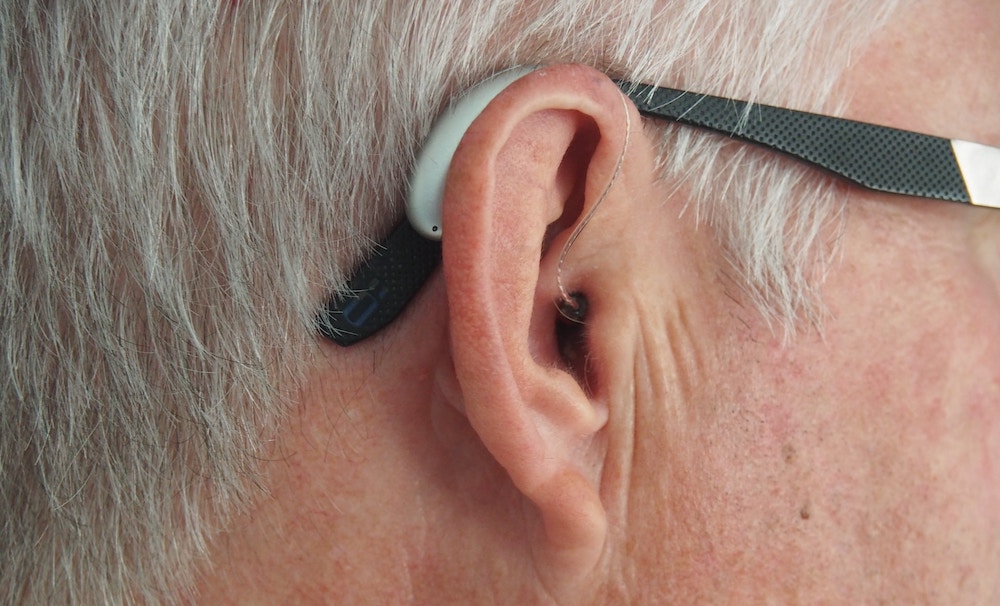
Hearing aid photo by Mark Paton on unsplash.com
Written by Ben Hensley
Two of the nation’s most widespread health concerns may be connected, according to experts.
A recent article published by diabetes.org showed that adults with prediabetes suffer from hearing loss at a 30% higher rate than non-diabetics. More alarmingly, a recent study revealed that hearing loss is twice as common in diabetic patients than non-diabetic patients.
The article also provided recommendations for individuals living with diabetes, revealing a connection that audiologists have noted since the mid-1990s, according to a local audiologist.
Dennis Thomas, president of hearing aid solutions provider Beltone Central California, has worked in audiology since 1985. He said the connection between hearing loss and diabetes is something the audiology community has been aware of for several decades now.
Thomas said initial hearing tests show some tell-tale differences in acute hearing loss when compared to long-term hearing loss due to diabetes.
“There’s actually a shape of the audiogram that I’ve been able to tell is a precursor to diabetes,” he said. “Even if they’re not diagnosed with diabetes, when we have a certain kind of hearing loss, it will show up on the audiogram and it can be a precursor to it.”
Thomas said that these signs can even lead to an early diagnosis for diabetes, though advancements in types and the amount of testing for the chronic condition often detect diabetes before a hearing exam does.
Thomas and the article both said that, while the direct relation between diabetes and hearing loss is not fully understood, diabetes can cause damage to small blood vessels inside the ear, similar to how the chronic condition affects the eyes and kidneys.
“When it comes to a diabetic patient it’s the nutrients that the inner ear is [not] getting and it’s causing damage equally to all the hair cells,” Thomas said. “You’ll have a ‘flat’ hearing loss because it’s affected by the body chemistry of the individual.”
He added that noise-induced hearing loss and diabetes-induced hearing loss to the patient often are indistinguishable. To audiologists, the difference is noted by the frequencies patients are able to hear, with noise-induced hearing loss often affecting the higher frequencies first.
With diabetic-related hearing loss, levels across the frequency range are affected simultaneously, creating a less noticeable drop in frequency detection.
Signs of hearing loss can include difficulty hearing the voices of women and small children, difficulty following conversations with multiple voices and frequently asking others to repeat themselves.
Thomas said the type of hearing aid that Beltone and other providers offer differs for diabetic patients, with a “less invasive” model needed to prevent complications.
“When it comes to diabetic wound healing, you’ve got to be careful what kind of device [you use],” he added. “Those ones that go deep inside the ear are not a good option because they can create hematomas and sores in the ear. Depending on how advanced the diabetes is, they can get some soreness in there and some pain and it makes it really difficult to heal.”
For more information about diabetes and early detection, individuals are urged to ask their doctor for preventative methods as well as screenings for diabetes and pre-diabetes.
Thomas also recommends routine hearing checks, especially for those with high risk factors for diabetes.
Related Posts
-
 Loss of tax credits drive Covered California insurance premiums higher for middle-income Valley residents Posted: April 14, 2026 at 4:13 pm
New enrollments in Covered California, the state’s health insurance marketplace
Read more » -
 Podiatrist, pharma rep sentenced in $3.2M fraud, unlicensed person performing skin grafts Posted: at 4:06 pm
U.S. District Judge Jennifer L. Thurston sentenced Felipe Ruiz, 52,
Read more » -
 $1.4M state investment fuels new EMS program Posted: April 8, 2026 at 3:31 pm
The Central Valley is bolstering its health care workforce with
Read more » -
 From Months to Weeks: Inside the physician network transforming specialty care Posted: at 3:23 pm
Over the past several years, United Health Centers has quietly
Read more »
Central Valley Biz Blogs
-

BLOG: Why beneficiary reviews are a must — not a maybe
Posted: April 13, 2026 at 2:11 pm
When it comes to financial planning, many people assume that
Read more » -

BLOG: Finding a future in machining
Posted: at 1:46 pm
Editor’s note: This is part of an employee spotlight series
Read more »