
The Business Journal marks 140 years of serving the Central Valley business community. Photo illustration by Israel Meave
Written by Business Journal staff
For 140 years, The Business Journal and its predecessor publications have served as the official record of commerce in the Central Valley — documenting deals, tracking trends and bearing witness to the forces that shaped one of the most productive agricultural and economic regions on earth.
To mark this milestone of our parent company Pacific Publishing Group, we asked our reporters to go back into the record and identify the stories that mattered most — one defining moment of economic significance per decade, stretching from our founding in 1886 to the present day.
We also had the guidance of Elizabeth Laval, widely regarded as a living repository of Fresno history. As president of the Fresno City & County Historical Society, Laval brings a rare perspective to the Valley’s past — her great-grandfather was Pop Laval, whose camera documented so much of Central Valley life in the early 20th century.
What emerged is not a comprehensive history. It is something more selective and, we hope, more useful: 14 stories that illuminate how this Valley grew, adapted, struggled and endured. Some are stories of innovation — a fig wasp, a raisin cooperative, a Sicilian immigrant with a shovel. Some are stories of disruption — a world war, a financial crisis, a pandemic that arrived without warning. Some are stories of ambition — a naval air station, a pediatric hospital, a shopping mall that changed where a city found itself.
Together they form a portrait of a place that has never been easy to farm, never been simple to govern and never stopped finding ways to feed, supply and serve a nation that depends on it more than it knows.
These are not just stories about the Central Valley’s past. They are the foundation of everything it is still becoming.
— Gabriel Dillard, managing editor
1886–1895
Fig gig: Fresno’s nursery turned neighborhood
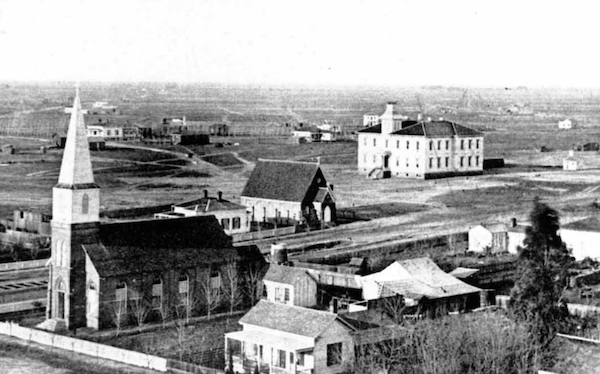
In 1886, Frank Roeding and his son, George, began experimenting with figs at Fancher Creek Nursery in Fresno, helping lay the foundation for another successful Central Valley farm industry.
According to digital food publication The Cook’s Cook, the Roedings focused on the Smyrna fig, a variety known for its quality as a dried fig but hard to grow commercially because of its need for pollination. The pollination process, known as caprification, is carried out naturally by the tiny fig wasp.
The Roedings’ work came as California nurserymen sought to establish the Smyrna fig in the state. Early attempts produced trees that grew well but dropped their immature fruit because they didn’t have the needed pollination.
By the early 1890s, Fresno horticulturists were increasingly convinced that successful caprification was the key to producing mature Smyrna figs commercially. The experiments would eventually help establish Fresno as an important center of California’s fig industry.
In Fresno, the fig industry and residential development joined forces when real estate developer J.C. Forkner turned 12,000 acres in northwest Fresno into a development that included individual 16-acre fig farms for each home at the turn of the 20th century. The ‘J.C. Forkner Fig Gardens’ would eventually come to be known as ‘Old Fig Garden.’
— Dylan Gonzales
1896–1905
From glut to gold: How cooperation saved the raisin industry
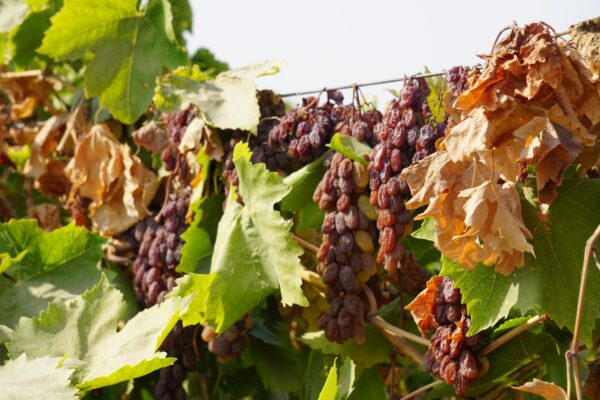
After a sharp decline in raisin prices during the 1890s, Fresno-area growers turned to cooperation to protect the region’s growing raisin industry.
An unusually large crop of more than 1 million pounds in 1894 pushed raisin prices down to just 2 cents a pound, according to historical accounts. Growers across Fresno, Madera, Merced, Kings and Tulare counties had already started forming cooperative marketing and packing associations, although most efforts had failed.
Martin Theodore Kearney, a real estate promoter and Fresno County vineyard owner, took up the cause. In May 1898, Kearney designed and founded the California Raisin Growers’ Association, according to historian Victoria Saker Woeste.
The goal of the association was to control quality, set prices and improve marketing for growers. It pooled 90% of the 1898 raisin crop and helped double the prices received by growers.
The association operated until 1904 but later established a model that would eventually lead to Sun-Maid, which was founded in 1912 and is widely considered one of the most popular raisin brands in the world today.
— Dylan Gonzales
1906–1915
Underground dreams: The man who dug his way into history
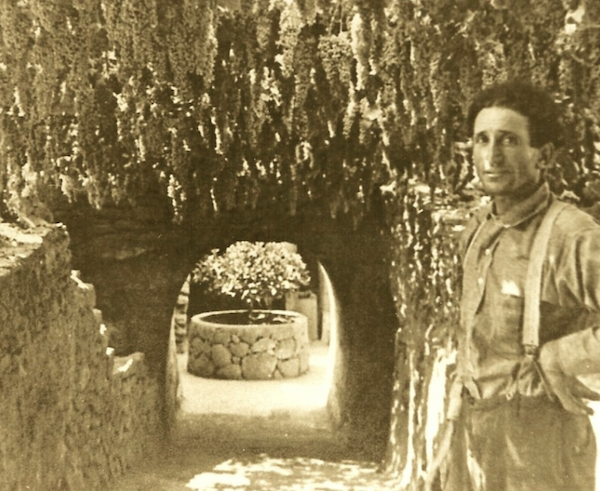
Baldassare Forestiere, a Sicilian immigrant, came to America in 1901 with dreams of becoming a citrus farmer. After settling in Fresno, Forestiere began carving an underground complex in 1906, turning the Central Valley’s unforgiving hardpan into an underground garden that proved a respite from the unforgiving summer heat.
Using just a pick, shovel and wheelbarrow, Forestiere spent about 40 years digging patios, grottoes, passageways and garden courts, modeling his work after the ancient catacombs he admired near his hometown of Filari, Sicily. He created the gardens without any type of formal plans, designing each space in his mind as he worked.
By the time he was 44, Forestiere had excavated and planted more than 10 acres. His underground gardens included orange, lemon and grapefruit trees, in addition to kumquats, jujubes, carob, quince, dates and wines. Some fruit grew as deep as 20 feet underground.
Forestiere continued developing the property until his death in 1946. The site was added to the National Register of Historic Places in 1977. Today, the Forestiere Underground Gardens is a popular destination for locals and visitors alike.
— Dylan Gonzales
1916–1925
War and harvest: How World War I transformed the Central Valley
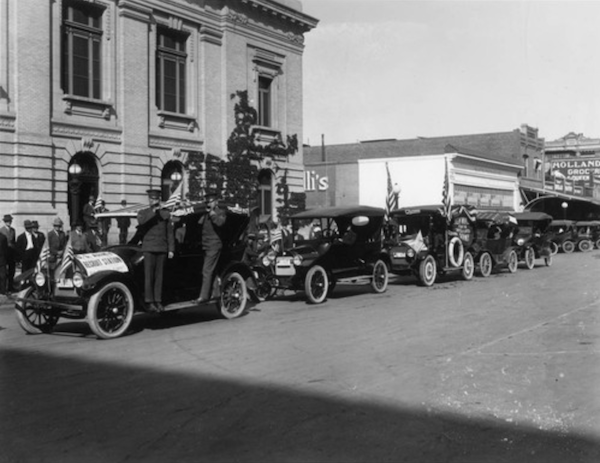
Long before Fresno became known as an agricultural powerhouse, World War I helped accelerate the region’s transformation from a Central California railroad town into one of the world’s most productive farming centers.
As the United States entered the war in 1917, food and agriculture demands for products ranging from wheat and cotton to grapes and raisins led to farmers expanding production, with railroads becoming increasingly important in moving crops to markets across the country and overseas.
The war also intensified labor shortages. With many men entering military service, growers began relying heavily on migrant workers and new immigrant communities to sustain production. The changes permanently altered the economic landscape of Fresno County.
During World War I, the Central Valley saw a turning point, with favorable prices and technological improvements encouraging farmers to increase production and invest in their operations.
The economic changes extended well beyond the fields themselves. Equipment suppliers, warehouses, banks, entrepreneurs and transportation companies all saw the region expand greatly, blossoming from a population of under 25,000 to over 45,000 by 1920.
More than a century later, the foundations of Fresno’s modern economy remain firmly rooted in the developments that occurred during WWI, when a rapidly growing agricultural community became an increasingly important economic force in California.
— Ben Hensley
1926–1935
Fresno’s complicated relationship with Prohibition
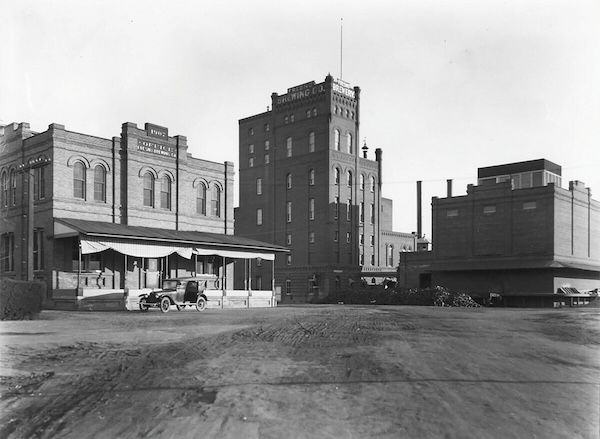
When the United States outlawed the manufacture, sale and transportation of alcohol in 1920, the nation entered the Prohibition era. Fresno, however, gained a reputation for playing by a different set of rules.
According to historical accounts, federal authorities considered Fresno County among the wettest regions in the country, despite the nationwide alcohol ban. Bootlegging operations flourished, underground establishments operated throughout the county and law enforcement officials often found themselves being accused of turning a blind eye to the illegal trade.
The Valley’s thriving agricultural economy complicated matters. Fresno County’s vineyards and grape growers had built an industry that became deeply intertwined with the region’s local economy. While Prohibition dealt a blow to commercial winemaking, numerous loopholes paired with weak enforcement efforts allowed alcohol production and distribution to continue.
Investigations conducted during the 1920s uncovered allegations of widespread corruption involving bootleggers, gamblers and public officials. The period has been described by historians as one of the most colorful chapters in Fresno’s history.
Today, many of the restaurants, bars and businesses that continue to define the city’s character trace their origins to the same neighborhoods that bustled during the Prohibition era.
For Fresno, Prohibition ultimately proved that national policies often collided with local economic realities, especially in a community built by farming, commerce and entrepreneurial ambition.
— Ben Hensley
1936–1945
Boom town: How Hammer Field transformed Fresno’s wartime economy
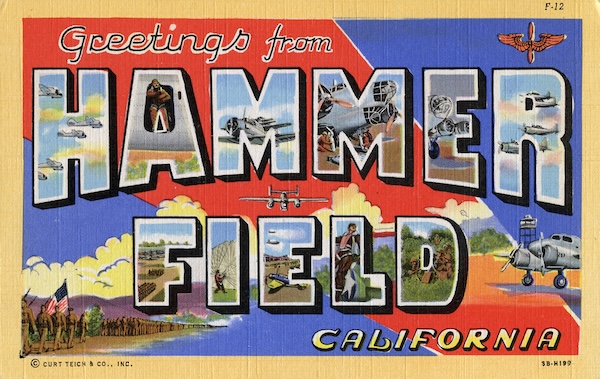
When the federal government selected Fresno as the site of Hammer Field in 1940, the city became far more than an agricultural center. Almost overnight, the city was transformed into an important hub of military aviation and wartime activity.
Construction accelerated after the attack on Pearl Harbor as thousands of servicemen arrived for training. During the war years, an estimated 60,000 personnel passed through the installation, including runways, hospitals, maintenance facilities and support buildings.
Their arrival created an economic boom throughout the city. Hotels and boarding houses filled with military personnel and their families, while restaurants, retailers and entertainment venues experienced an influx of customers. The city saw local dance halls and downtown businesses become gathering places for soldiers stationed at Hammer Field and nearby Camp Pinedale.
City leaders recognized the importance of the installation not only for the war effort but also to enhance the region’s future growth. The investment in infrastructure and aviation facilities permanently altered the region’s trajectory from a strictly ag- and transportation-based hub to one that connected Northern and Southern California with the rest of the country.
Following the war, Hammer Field evolved into Fresno Air Terminal and, eventually, Fresno Yosemite International Airport.
The base’s military mission ended decades ago, but its legacy remains visible every day. What began as a wartime necessity ultimately helped establish Fresno as the aviation center of California’s Central Valley.
— Ben Hensley
1946–1955
Postwar roots: The Central Valley’s transformation begins
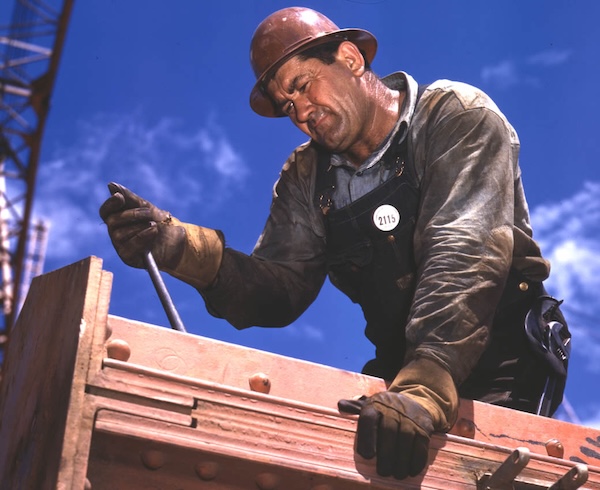
When the soldiers came home, they didn’t just bring families — they brought a new Valley.
In the years following World War II, the San Joaquin Valley underwent one of the most significant economic transformations in its history, shifting from a patchwork of rural farming communities into the agricultural-industrial powerhouse it remains today. Returning veterans and migrant laborers settled across Fresno, Kings, Madera and Tulare counties, driving the four-county population from 480,700 to 552,900 between 1947 and 1955, according to estimates from the California Department of Finance.
The expansion didn’t happen by accident. Federal water projects and groundwater pumping opened new acreage to irrigated agriculture. Mechanization reshaped labor needs on the farm. Highway construction — including improvements to U.S. Highway 99, connecting Madera, Fresno, Kingsburg and Tulare — linked the Valley’s communities to each other and to markets beyond. Food processing and agricultural packing industries took root alongside the fields.
The result, documented in a 1958 California Agriculture journal, was a massive shift toward industrialization that made the Central Valley one of the most productive agricultural regions on earth — fueling the cotton, raisin, dairy, cattle, citrus and stone fruit industries that still define the region today.
— Frank Lopez
1956–1965
Beyond the harvest: How the Central Valley built a food economy
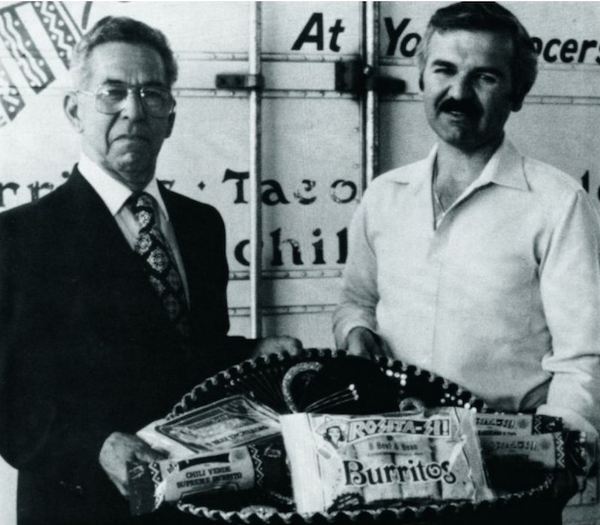
The postwar boom didn’t just bring more people to the Central Valley — it brought machines, factories and a new economic order.
Between 1956 and 1965, the four-county region’s population grew from 565,100 to 688,100, according to the California Department of Finance. But the more consequential transformation was happening in the fields and warehouses. Agriculture was mechanizing rapidly, with tractors, specialized harvesters, electrically powered irrigation pumps, bulk-handling equipment and mechanized processing lines replacing the manual labor that had defined the Valley’s farms for generations.
The shift created opportunity beyond the fields themselves. Packing houses, dairies, wineries, freezers and canneries expanded across the region, building an industrial food economy on top of the agricultural one.
Two companies founded in this era illustrate what that moment made possible. In 1963, Wawona Frozen Foods opened in Clovis — one of only 15 frozen fruit processors in the country at the time. A year later, Ruiz Foods launched out of a small warehouse with two employees, making frozen enchiladas, burritos and tamales before eventually moving its main production operation to Dinuba.
Both companies are still here. Both grew into major employers. And both trace their roots to a decade when the Central Valley decided that farming alone was no longer enough.
— Frank Lopez
1966–1975
From downtown to drive-through: How the Valley’s retail revolution reshaped the region
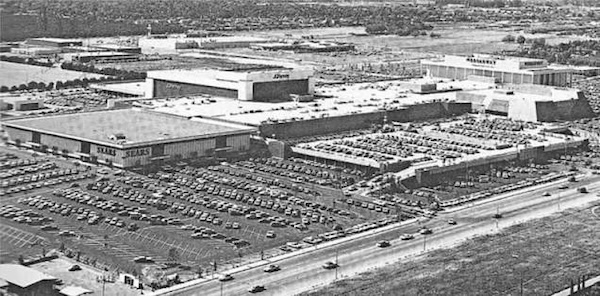
Between 1966 and 1975, the four-county region was changing in ways you could see from the road.
The population of Fresno, Kings, Madera and Tulare counties grew from 698,400 to 786,900 — a 12.7 percent increase, according to the California Department of Finance. But the more visible transformation was happening along the commercial corridors sprouting north of downtown Fresno, where new shopping centers, parking lots and chain stores were quietly rewriting the rules of how the Valley did business.
The defining moment came in 1970, when Fresno’s Fashion Fair mall opened with anchor tenants Gottschalks, JCPenney and Weinstock’s. The project announced something that urban planners and downtown merchants would spend years grappling with: investment was moving north, toward Shaw Avenue, and away from the compact downtown blocks that had anchored Fresno’s commercial life for generations.
The shift followed a pattern playing out across suburban America. Families moving into new housing tracts wanted shopping nearby. Developers delivered — strip malls, commercial corridors, drive-in restaurants, supermarkets, motels, service stations and freestanding stores replaced the walkable retail of an earlier era.
National and California chains were well positioned to capitalize. They could finance larger buildings, buy advertising and inventory at scale, and negotiate prominent locations in new centers — advantages independent downtown merchants simply couldn’t match.
What had once centered on a downtown core now stretched along arterial roads, oriented toward the car and the chain. It was a transformation that would define the region’s commercial geography for generations — and one the Valley is still reckoning with today, as Downtown Fresno works to reclaim the vitality it began losing more than 50 years ago.
— Frank Lopez
1976–1985
World Ag Expo roots: International Agri-Center is born
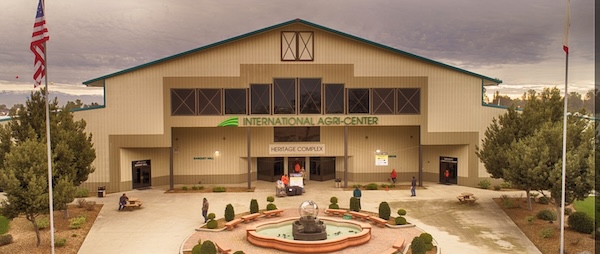
What started as a regional farm show in 1968 became one of the most consequential economic development decisions in Central Valley history.
The California Farm Equipment Show began modestly in 1968 at the Tulare County Fairgrounds, celebrating agricultural heritage through vintage tractors, antique engines and equipment auctions. But by the mid-1970s it had outgrown its home. In 1976, show directors voted to explore something far more ambitious — a permanent, purpose-built international agribusiness showplace.
Six years later, the International Agri-Center opened in Tulare, and the show it hosts, the World Ag Expo, grew into the largest annual agricultural exposition on earth. Today it draws more than 100,000 visitors from over 50 countries each year, generates roughly $60 million annually for Tulare’s local economy and serves as a living argument that the Central Valley is not just where food is grown — it is where the future of food is decided.
— Emi Obrero
1986–1995
Five mothers, one mission: How Valley Children’s Hospital transformed the Central Valley
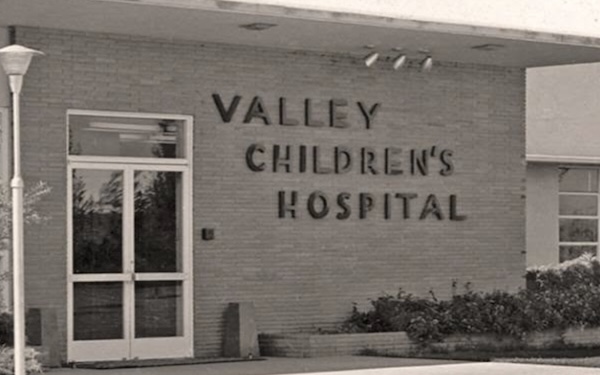
In 1952, five mothers looked at the Central Valley and saw what was missing: quality healthcare for its children. What they built would eventually become one of the largest pediatric healthcare networks in the country.
Valley Children’s Hospital opened as a specialty facility focused on pediatric acute care — a first for the region. For decades it grew steadily, but the 1980s marked a period of accelerated expansion that would reshape healthcare across the Valley. The hospital opened its first neonatal intensive care unit at Saint Agnes Medical Center in 1985, followed by its first rehabilitation center a year later. By 1989, it had extended its reach to Merced with the opening of the Valley Children’s Olivewood Specialty Care Center.
Nearly a decade later, the hospital made a defining move — relocating from Fresno to Madera, planting itself at the geographic heart of its four-county service area.
The impact extended well beyond medicine. As Valley Children’s grew, it helped establish healthcare as a significant non-agricultural economic sector in a region long defined by its fields and orchards. Today the hospital system employs more than 4,000 staff members, works with over 740 physicians and serves approximately 1.3 million children across the region.
What five mothers started, an entire Valley now depends on.
— Emi Obrero
1996–2005
From farmland to flight deck: The rise of NAS Lemoore
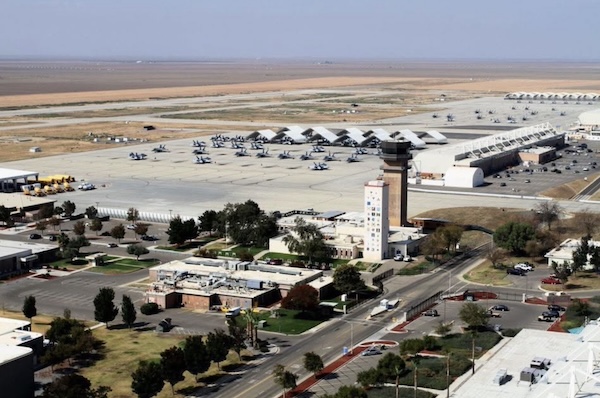
When Naval Air Station Lemoore was commissioned in 1961, planners chose the site deliberately — close enough to Navy seaport facilities to be useful, far enough from major population centers to allow room to grow. What they built would eventually become the Navy’s largest master jet base, and one of the most significant economic engines in the Central Valley.
The base’s defining moment came in July 1998, when NAS Lemoore was selected as the West Coast home for the U.S. Navy’s newest strike-fighter aircraft, the F/A-18 E/F Super Hornet. The decision was transformational. More than 9,000 military and civilian workers came to the region, and the installation’s economic contribution to the surrounding area grew to exceed $1 billion annually. In 2019 alone, the base generated $947 million for Kings County and supported nearly 8,500 jobs.
Today, NAS Lemoore is home to the Commander Strike Fighter Wing Pacific, the Commander Joint Strike Fighter Wing, more than half of the Navy’s F/A-18 E/F Super Hornet fleet and the next-generation F-35C Lightning II.
In a county defined by agriculture, the base built something equally enduring — a second economy, measured not in harvests but in flight hours.
— Emi Obrero
2006–2015
Ground zero: How Fresno became a symbol of America’s housing collapse
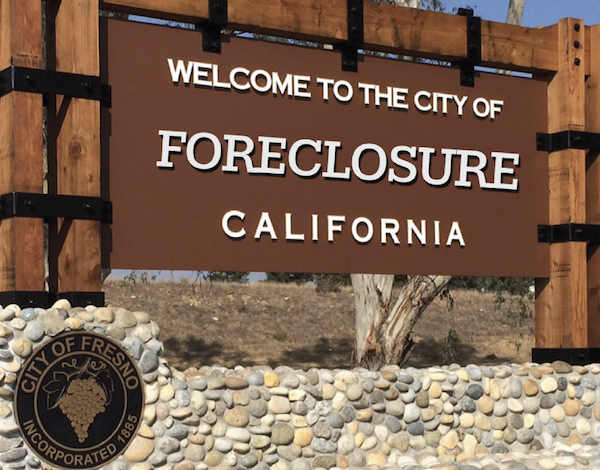
In January 2010, nearly 13 cents of every mortgage dollar in Fresno County was in serious trouble — delinquent, in foreclosure, or already surrendered to the bank. That rate was nearly 50 percent worse than the national average, and it told a story the numbers alone couldn’t fully capture.
Just three years earlier, the Valley had been riding a historic boom. Home prices had surged 27 percent annually from 2003 through 2005. Builders were permitted to construct more than 5,300 homes a year. Lenders were offering what seemed like opportunity to anyone who asked.
Then, in December 2007, the Great Recession began — and the Valley felt it harder than almost anywhere in the country. Every major business sector shed jobs. Construction collapsed. Retail buckled. Fresno lost institutions that had defined the community for generations, among them Gottschalks, the homegrown department store chain that had anchored Valley shopping centers since 1904 before filing for bankruptcy in 2009.
By 2009, two of every three homes sold in Fresno County was a distressed sale. Average home values fell by a quarter in two years. The human cost showed up in congressional testimony from nearby Stockton that year: an 86-year-old woman on $960-a-month Social Security, her home paid off, had been cold-called by a lender and talked into a $200,000 loan. Six months after closing, her payment reset from $260 to $1,500 a month. She was one of millions. Across the Central Valley, a generation of families lost not just their homes, but their footing.
— Gabriel Dillard
2016–2026
Shut down: How COVID-19 reshaped the Central Valley economy overnight
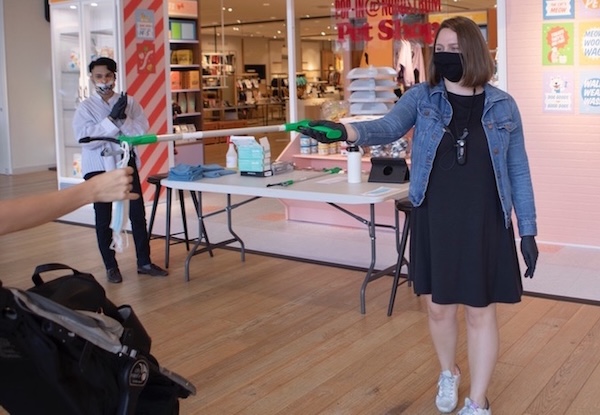
Nordstrom Rack reopened in Fresno in June 2020 with added safety measures including face coverings provided for staff and customers. File photo
Fresno County entered 2020 with nearly 420,000 people employed. Within months, more than 70,000 of them were out of work.
In March 2020, Gov. Gavin Newsom declared a state of emergency as COVID-19 spread across California. Less than two weeks later, the state issued its first stay-at-home order. Restaurants, retailers and offices that had begun the year under normal conditions suddenly faced closures, restrictions and an uncertain future.
The economic collapse was swift.
By May, Fresno County’s unemployment rate had climbed above California’s statewide peak of 16.1%, according to California Employment Development Department data.
Businesses scrambled to adapt. Restaurants turned to takeout and outdoor dining. Offices sent employees home. Retailers faced capacity limits. Employers reopening their doors encountered distancing requirements and new workplace rules.
Federal relief programs, particularly the Paycheck Protection Program, became a lifeline. Valley banks processed unprecedented volumes of emergency loans as employers sought funds to keep workers on payroll and businesses afloat.
Despite efforts, some familiar names disappeared, including Hye Quality Bakery. The Armenian bakery, known for its cracker bread, closed in 2020 after operating from the same Fresno location for 63 years, one of the legacy businesses lost during the upheaval.
By 2023, California’s COVID-19 state of emergency was over. Its economic legacy was not. Businesses that survived had learned to operate with fewer certainties, new ways of serving customers and a lesson delivered almost overnight: Even tried and true business practices can be undermined by economic decline.
— Denine Currie
Related Posts
-
 Fresno Nightcrawler plush sells out at Build-A-Bear Posted: August 19, 2026 at 3:22 pm
The internationally known Central Valley cryptid has sold out online
Read more » -
 From fig wasps to fighter jets: 140 years of Central Valley history Posted: at 3:02 pm
For 140 years, The Business Journal and its predecessor publications
Read more » -
 Central Valley companies climb 2026 Inc. 5000 list of fastest-growing firms Posted: at 12:14 pm
A dozen Central Valley companies made the 2026 Inc. 5000,
Read more » -
 Kaiser Permanente names new leader for Fresno service area Posted: August 18, 2026 at 4:34 pm
Kaiser Permanente has named Tracy Bertagnole senior vice president and
Read more »
Central Valley Biz Blogs
-

BLOG: 140 years, five generations, one mission
Posted: August 19, 2026 at 3:30 pm
There are very few moments in a company’s history that
Read more » -

BLOG: Spending money is emotional — the missing piece of financial literacy
Posted: August 18, 2026 at 2:47 pm
I can spend hours teaching someone financial concepts, helping them
Read more »