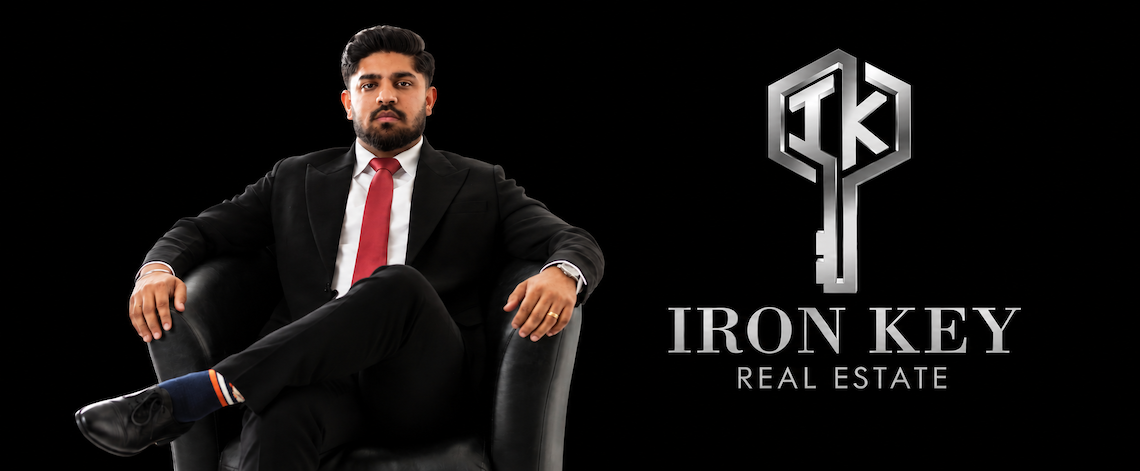
Lovepreet Chandi, a real estate agent with Iron Key Real Estate, is among a growing number of Gen Z agents entering the industry as local brokerages put greater emphasis on training, mentorship and accountability. Courtesy of Lovepreet Chandi/Business Journal photo illustration
Written by Dylan Gonzales
Gen Z real estate agents are entering the industry with technological familiarity and entrepreneurial ambition, but local brokerage leaders say some underestimate how long it takes to build a sustainable business.
Local brokerage leaders say Gen Z, which is considered anyone born from 1997 through 2012, is showing a strong and growing presence in the real estate community. But they also noted that young agents need structured training, mentorship and accountability to turn early excitement into long-term, sustainable careers.
Joanna Odabashian, co-owner and CEO of Central California Real Estate Pros, said agents under 30 make up 5% to 7% of real estate licensees across the country, according to the National Association of Realtors. At her brokerage, 15% of licensed agents are Gen Z.
Real estate offers autonomy
Odabashian said younger agents are typically attracted to real estate because of the autonomy, schedule flexibility and entrepreneurial opportunities it offers. She cautioned against brokerages assuming that growing up with smartphones automatically translates into the technology skills needed to run a real estate business.
“Not to assume the tech fluency, but to provide a really structured training,” she said. “(Gen Z) really respects structured training on the tools, and then bridging the gap to relationship building because that’s really the core of the real estate business.”
The training, she said, needs to cover databases, customer relationship management systems, multiple listing service data and transaction workflows, while also focusing on building relationships.
Odabashian said contract education is important for new agents. Her brokerage uses scenario-based workshops to teach agreements, contingencies and disclosures, along with mentoring that allows newer agents to learn from experienced professionals.
The way new agents are taught to find clients has also changed, she said. More traditional methods such as cold calling, contacting expiring listings and working with for-sale-by-owner properties have given way to an increased focus on relationships, connections and an agent’s sphere of influence.
Training over tech-savvy assumptions
J.P. Shamshoian, owner and CEO of Realty Concepts, said he sees both sides of the stereotypes often associated with Gen Z in the workplace.
Some young agents expect immediate results or want the benefits of the business without going through growing pains, he said. Others are driven, focused and motivated.
“Good Gen Zers are better than any generation that I’ve seen so far,” Shamshoian said. “They are just so motivated, they’re so driven and they have such a definite idea of what they want for themselves. It’s really inspiring.”
Realty Concepts balances digital training with in-person interaction. The brokerage offers 10 weeks of training, with two days a week in person and five days a week of structured work, covering contracts, disclosures and forms as well as finances, time management and keeping a positive mindset.
Shamshoian said one challenge for younger agents is that their potential client base is also reaching traditional milestones later in life. Gen Z adults are marrying, starting families and forming households later, meaning a 20-something agent may have fewer peers who are ready to buy a home.
Despite some challenges, he said some Gen Z workers are “crushing it” with their energy and creativity.
Shadowing, accountability and delayed gratification
Brandon Gonzales, broker and owner of Iron Key Real Estate, said the brokerage is seeing a strong showing of Gen Z agents, including people entering real estate while attending school and others going directly into the industry.
Iron Key does not specifically target a generation in recruiting, Gonzales said, but its social media presence has helped attract younger agents. Once they join, the brokerage focuses on training, support and accountability.
Young agents are required to shadow experienced agents and get involved in contract and appointment-setting strategy meetings, Gonzales said.
He said the biggest challenge he sees is the delayed gratification of building a real estate business.
“Keeping them engaged and letting them know that they are on the right track to laying a great foundation in a productive business,” Gonzales said. “So the way that we do that is we start tracking the things that are measurable to show how they’re starting to convert into positive client experience.”
Gonzales pointed to Lovepreet Chandi, 26, as an example of what can happen when a young agent combines patience with a strong work ethic and has a good support system. Chandi, who has been with Iron Key for just over a year, said he has closed 55 homes in 2026, primarily helping first-time home buyers purchase new-construction homes.
Chandi said access to experienced agents at Iron Key has been important to his development. He is also active on TikTok, Instagram and Facebook and relies on word-of-mouth referrals to generate business.
Chandi has more than 1,800 followers on Instagram and nearly 2,000 on TikTok. His posts target potential clients who speak Punjabi, Hindi or English.
Playing the long game
The brokerage leaders agreed that Gen Z’s long-term role in real estate will be significant. But they said attracting and retaining young agents requires being honest about the work that goes into it.
Odabashian said aspiring agents should not look at real estate as a get-rich-quick opportunity and may even need another job while building their business. Gonzales said brokerages should look into introducing real estate as a career earlier through school visits, career fairs and other outreach.
In the year Chandi has been on the job, he has absorbed the knowledge and mentorship offered to him, and has seen it pay off.
“As long as you’re willing to put in the time, you’ll see the results,” Chandi said.
Related Posts
-
 Gen Z is entering real estate. Local brokers say training is the difference Posted: September 10, 2026 at 9:13 am
Gen Z real estate agents are entering the industry with
Read more » -
 Ruiz Foods to lay off 176 at Dinuba plant, shift to five-day schedule Posted: September 9, 2026 at 5:28 pm
Frozen-food maker cites need to align production with customer demand
Read more » -
 Poll: Most Business Journal readers support armed prosecutors Posted: at 3:13 pm
A recent attack on a Fresno County prosecutor has prompted
Read more » -
 Chuze Fitness, Crunch expand with Fresno and Visalia gyms Posted: at 3:02 pm
Two fitness chains are expanding their Central Valley footprint, with
Read more »
Central Valley Biz Blogs
-

OPINION: Manufacturing’s next chapter is being built in the San Joaquin Valley
Posted: September 8, 2026 at 12:44 pm
Manufacturing in the San Joaquin Valley has never been static.
Read more » -

OPINION: Fresno County should stop leaving visitor revenue on the table
Posted: September 1, 2026 at 3:19 pm
As Fresno County Assessor-Recorder, I spend a great deal of
Read more »