Cracked streets. Potholes. Broken sidewalks. Neighborhood roads that have waited years for repair. Fresno County does not need a study to prove the problem; we drive over it every day.
But before voters commit to a 30-year, half-cent sales tax, several questions about how Measure S reached the ballot, who is paying for it and how it will be spent deserve honest answers.
How did Measure S reach the ballot?
Assembly Bill 1923 began in February 2026 as a proposal to add $300 million in new funding to California’s Distressed Hospital Loan Program. In August, lawmakers stripped out the hospital provisions entirely and rewrote the bill to instead require Fresno County to place Measure S on the November ballot, overriding the Board of Supervisors’ vote to delay the measure to 2028. Kaweah Health’s CEO publicly objected that the move would “impact hospitals across the entire state.”
Meanwhile, no county-sponsored transportation measure qualified for November, and the separate Fix Our Roads initiative also failed to gather enough valid signatures. With both a county-led alternative and a citizen-led alternative absent from the ballot, Fresno County officials bear some share of the blame for leaving voters with no real choice but Measure S.
Who paid to qualify Measure S?
Campaign filings covering January through June show the Measure S committee raised approximately $1.24 million, much of it spent on an out-of-state signature-gathering firm. The largest contributor was the Central Valley Community Foundation at $810,000, followed by the North Coast States Regional Council of Carpenters Issues PAC at $250,000 and the Fund for a Better Future at $150,000. Voters should know who financed the effort to get this measure in front of them.
Is the oversight genuinely independent?
Measure S shifts oversight from the Fresno County Transportation Authority to the Fresno Council of Governments (COG), adding annual audits and an 11-member citizens committee that meets publicly each quarter. But the Fresno COG policy board would appoint all 11 members itself. Audits conducted by outside firms may well be independent; a watchdog committee entirely appointed by the agency it is watching isn’t a watchdog.
That distinction matters because Measure C’s record gives little reason for confidence. In early 2023, Fresno’s public works director estimated the city’s deferred street maintenance backlog at roughly $505 million. By June 2025, that estimate had grown to $1.2 billion for streets and $300 million for sidewalks, a combined $1.5 billion problem – roughly three times the 2023 figure, despite decades of Measure C revenue. Before asking voters for another 30 years, the public deserves a district-by-district accounting: current backlog, pavement condition index, exactly what Measure C dollars have actually completed and a truly independent watchdog.
Why 25% for transit and who is it actually serving?
Measure S dedicates 25% of its revenue to public transit, alongside at least 150 Safe Routes to School projects and 120 miles of protected bike lanes. Before committing a generation of tax dollars, voters deserve to know who these investments serve.
Start with bicycling. Less than 1% of Fresno residents commute by bike, according to the League of American Bicyclists’ Bicycle Friendly Community data. That’s the population a major bike-lane expansion is built to serve.
Transit tells a more complicated story. Ridership today sits roughly 42% below the system’s 2009 peak. By rough estimate, only about 3.5% of Fresno’s population boards a bus on any given day, and FAX’s own averages suggest many buses run closer to five passengers than their roughly 40-seat capacity. That means buses are running at roughly 88% vacancy.
This isn’t an argument against transit itself; a city with residents who lack cars needs a functioning bus system. The question is whether a system carrying a shrinking share of the population has earned first claim on 25% of a $7.4 billion, 30-year commitment without route-level proof the investment will change outcomes, not just maintain them.
Measure S isn’t a one-year budget line. It’s locked in for three decades, spanning administrations, councils, and transportation trends no one can predict today. Fixing a 25% allocation for that long, based on system-wide averages rather than route performance, forecloses the flexibility to redirect funds toward what’s working.
Before you vote, ask yourself these two questions:
After decades of Measure C, with road conditions still worsening, do you want to commit to another 30 years of taxation before the county demonstrates real transparency?
Do you support dedicating 25% of a $7.4 billion tax to transit and bike infrastructure instead of roads and sidewalks, when only about 3.5% of Fresno residents ride the bus and less than 1% are bike riders?
Money collected, money allocated, work completed, results measured, that is what transparency actually looks like, and it’s what this measure still owes voters.
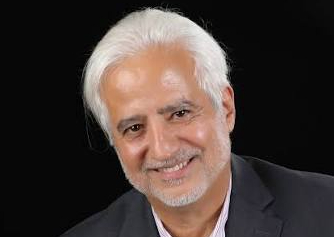
AJ Rassamni is community advocate, president of the Blackstone Merchants Association and founder of Success From Within, a nonprofit organization.