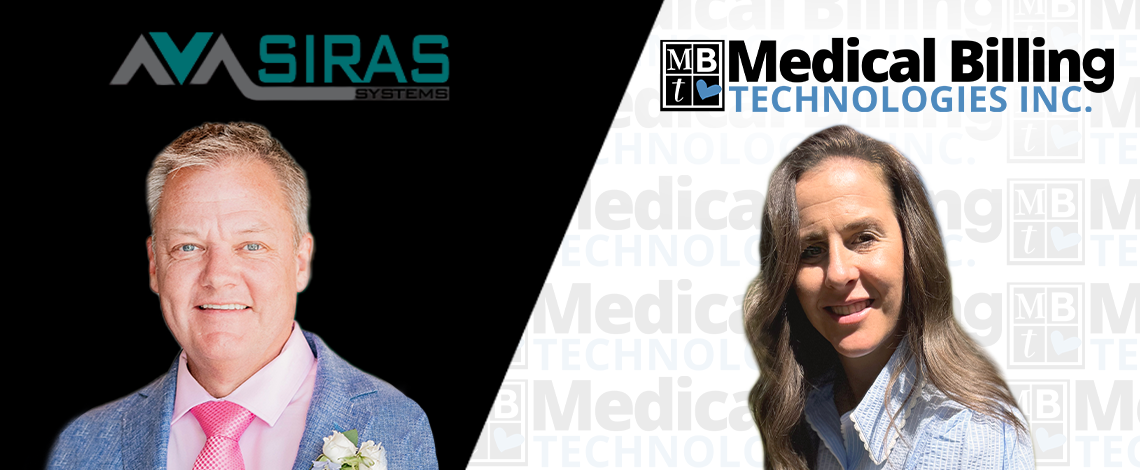
From left, Brian Marcontell with Siras Systems and Kelly Lingenfelter with Medical Billing Technologies in Visalia have brought their firms together to ease school compliance burdens. Photos via MBT/Photo illustration by Cecilia Lopez
Written by Ben Hensley
Visalia-based Medical Billing Technologies (MBT) has acquired Santa Barbara-based Siras Systems, combining decades of experience in special education program development, documentation and billing under one roof.
Kelly Lingenfelter is president of operations at MBT, the company she co-owns with her brother Reid Stephens. Lingenfelter said the merger creates a more complete solution for school districts that rely on state and federal funding sources.
“Our biggest priority has always been making sure schools are able to maximize their funding and stay in compliance,” Lingenfelter said. “By bringing MBT and Siras together, we’re giving districts a single system that connects documentation, billing and reporting in a way that just hasn’t existed before.”
Founded over 30 years ago by Lingenfelter’s mother, Roberta Stephens, MBT assists rural and underserved schools in navigating special education billing. Siras Systems, developed in Ventura County, grew into a leading provider of software that tracks individualized education plans (IEPs) and other compliance requirements.
The pairing of the two will streamline processes for their client.
“Districts have always had to juggle multiple systems,” said Brian Marcontell, former vice president at Siras and now managing operations under MBT. “This integration means that the data collected in classrooms ties directly to the reporting and billing schools need. It’s going to save educators time and reduce the risk of costly mistakes.”
Both Marcontell and Lingenfelter stressed that the merger is not just about efficiency, but also about student outcomes; with schools facing declining enrollment but a rising demand for special education services, Lingenfelter said the combined platform can help districts stretch limited resources even further.
“We see this as a way to support the teachers and the students they serve,” she said. “The more streamlined the system, the more time and energy schools can put back into the classroom.”
Related Posts
-
 Paradox of Plenty: Why California can be wet and still short on water Posted: April 20, 2026 at 4:36 pm
For much of California's agricultural history, a wet winter brought
Read more » -
 Fresno hard money lender pleads guilty in $45M fraud tied to Bitwise, Ponzi scheme Posted: at 3:20 pm
Fresno hard money lender David Hardcastle pleaded guilty Monday to
Read more » -
 Labor Secretary Lori Chavez-DeRemer is leaving Trump’s Cabinet after abuse of power allegations Posted: at 2:58 pm
(AP) — Labor Secretary Lori Chavez-DeRemer, a Central Valley native,
Read more » -
 Fresno Arts Council ex manager pleads guilty; sentencing Aug. 10 Posted: at 2:43 pm
Suliana Caldwell, 46, pleaded guilty on Monday to embezzling $1.8
Read more »
Central Valley Biz Blogs
-

BLOG: Why beneficiary reviews are a must — not a maybe
Posted: April 13, 2026 at 2:11 pm
When it comes to financial planning, many people assume that
Read more » -

BLOG: Finding a future in machining
Posted: at 1:46 pm
Editor’s note: This is part of an employee spotlight series
Read more »