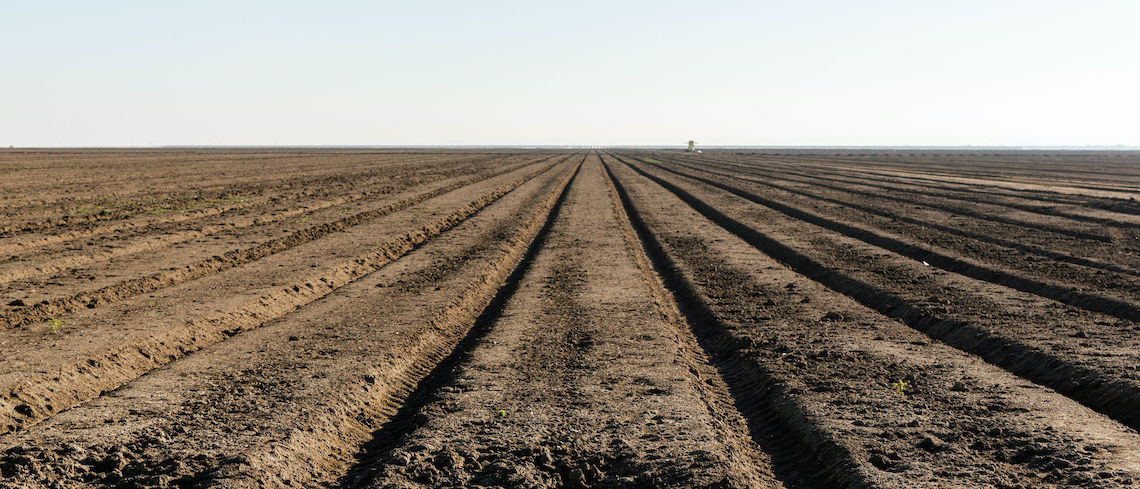
Farmland photo by Melissa Sweeney
Written by Dylan Gonzales
Agricultural real estate across the Central Valley continued to adjust in 2025 as land values and transaction activity responded to prolonged commodity price weakness, higher interest rates and ongoing water supply constraints.
One of the year’s most notable ag-related transactions occurred in April with the sale of the former Gerawan Farming Plant 2 in Reedley. The 360,000-square-foot cold storage facility on nearly 29 acres was acquired by G2 Commercial Complex LLC, a locally owned, family-run company. Previously owned by private equity firm Paine Schwartz and leased by Prima Wawona prior to its 2023 bankruptcy, the facility had been largely inactive. Reedley officials said the transaction could ultimately support up to 100 jobs.
Data from the 2025 Trends in Agricultural Land & Lease Values report by the California Chapter of the American Society of Farm Managers and Rural Appraisers showed continued downward pressure on land values in Fresno, Kings, Tulare and Madera counties, particularly for parcels without reliable surface water. In Fresno and Madera counties, listing prices declined for open land and permanent plantings outside irrigation districts. Almond orchards within Tier 1 districts such as Fresno, Alta and Consolidated continued to command stronger prices, though activity slowed on water-limited properties.
Pistachio values varied based on orchard maturity and water access. Kings and Tulare counties showed similar trends, with almond and pistachio values softening overall. The steepest discounts were tied to “white land” and areas facing groundwater pumping restrictions under the Sustainable Groundwater Management Act. Financial stress on operators increased. U.S.
Court data showed 216 farm bankruptcies nationwide in 2024, a 55% increase from the prior year, with California leading the nation. In Fresno County, business bankruptcies rose 65% in the 12 months ending March 31, 2025. Higher interest rates, rising production costs and weaker prices — particularly for almonds and wine grapes — were frequently cited as contributing factors.
Lenders also tightened standards, with required down payments increasing from roughly 35% to 50%, limiting buyer pools. As values adjusted, most acquisitions involved local operators expanding existing operations rather than institutional investors.
In a stabilizing move, the U.S. Department of Agriculture reversed plans in May to close its Farm Service Agency office in Madera, preserving access to loans and program services for area producers.
Related Posts
-
 Army officials visit Pine Flat Dam to discuss 12-foot expansion project Posted: January 19, 2026 at 3:41 pm
Assistant Secretary of the Army Adam Telle joined Rep. Vince
Read more » -
 BLOG: What 2,100 lost jobs say about the Valley’s ag economy Posted: January 16, 2026 at 2:24 pm
In an excruciating span of just a few days, the
Read more » -
 Three Central Valley landowners rank among nation’s 100 largest Posted: January 13, 2026 at 12:15 pm
Three landowners with Central Valley ties rank among America's 100
Read more » -
 Two Central Valley businesses highlighted as UN celebrates women farmers Posted: January 12, 2026 at 2:40 pm
Women now operate on 63% of California farms — more
Read more »
Central Valley Biz Blogs
-

BLOG – No Joke: Touring comics keep coming back for Fresno’s food scene
Posted: January 23, 2026 at 2:29 pm
A pair of touring comedians from different generations lit up
Read more » -

BLOG: Why mentorship matters, especially for girls
Posted: January 22, 2026 at 9:33 am
January is National Mentoring Month, and it offers an important
Read more »