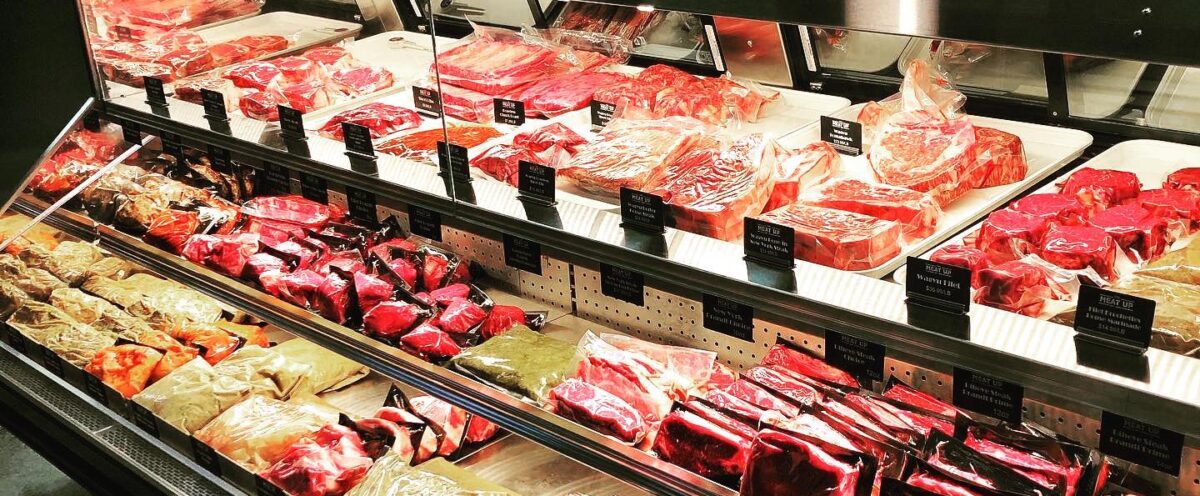
Photo via The Meat Up Facebook | At The Meat Up butcher shop in Fresno, customers are still eating plenty of beef, but are choosing cheaper cuts for a more affordable yet enjoyable dining experience
Written by Frank Lopez
Consumers are still filling up on beef despite rising prices, with demand strong in the face of a historically low supply of beef cattle in the U.S.
Shoppers across the country are seeing higher grocery bills, with the price of ground beef currently exceeding $6 per pound, according to the U.S. Bureau of Labor Statistics. Beef and veal prices are 13.9% higher than last year, according to data from the U.S. Department of Agriculture.
According to the USDA’s January Cattle Inventory report, all cattle and calves in January totaled 86.7 million head, down about 1% from 87.2 million in 2024. This was the lowest point for the U.S. cattle population in 74 years.
Beef cows that have calved totaled 27.9 million—a 1% drop from 2024 and a new record low since 1965.
Heifers for beef cow replacement expected to calve saw a 2% drop with a total of 2.92 million.
In late October, President Trump announced the U.S. plans to import more beef from Argentina in an effort to bring prices down.
The move brought fury from the U.S. ranchers, with the National Cattlemen’s Beef Association (NCBA) saying Trump’s efforts to manipulate the market risk damaging the livelihoods of American cattle ranchers while doing little to impact consumer prices.
According to the NCBA, Argentina has shipped beef valued at more than $800 million to the U.S., while purchasing only $7 million U.S. beef.
“The NCBA and its members cannot stand behind the President while he undercuts the future of family farmers and ranchers by importing Argentinian beef in an attempt to influence prices,” said NCBA CEO Colin Woodall. “It is imperative that President Trump and Secretary of Agriculture Brooke Rollins let the cattle markets work.”
Local trends
Cindy Tews, managing member at Fresno Livestock Commission, said the industry is seeing “unheard of” demand as the country has the lowest herd numbers since 1951.
“We have an increase in population, and a decrease in overall numbers, although the yields for them have increased substantially since 1951,” Tews said. “Per head, there is more meat than their used to be.”
There has also been an increase in carcass weight overall, Tews said.
Some of the reasons attributed to the decrease in herd populations include urban encroachment and weather conditions such as drought, which led to a tremendous sell off, she said.
Higher prices don’t encourage cattle ranchers to reinvest in younger cattle, Tews said.
The aging population of the rancher also plays a factor, Tews said, with many of them looking for something to do other than manage cattle.
The 2022 Census of Agriculture reports that the average age of U.S. farmers has risen to 58.1 years.
Despite the higher prices, consumers are still eating plenty of beef, Tews said. The flavor and various methods of preparation can’t be beat, she added.
“It’s a family favorite. When people go out and celebrate, they often go out and buy a steak. For us in the Valley, a tri-tip is very popular as a celebration meal. The demand is still high,” Tews said.
It’s not just beef cattle that there is a high demand for, Tews said, but for all proteins across the board.
“The rancher is just now seeing some profit, where for the longest time it’s been more of a break-even,” Tews said.
Less premium cuts
Rizpah Bellard, a second-generation rancher and founder of Nova Farming, is a custom supplier of high quality, all-natural beef in Fresno.
Bellard said their main products are ground beef and carne asada, with large institutions including food banks, school districts, prisons and hospitals as their principal buyers.
She said there is a shortage of mother cows, which has raised the national prices of beef.
There are fewer cows being raised in the U.S., she said, but there is also less beef coming in from countries such as Brazil, Canada and Mexico.
Due to increases in the supply chain, such as for the plastic they package their beef in, Bellard has had to increase their own prices for beef.
“There is also increased price in labor, in fuel and in insurance. I’ve had to increase my prices to make sure my whole supply chain is covered, and I get a little profit on the back side too,” Bellard said.
In grocery stores, Bellard said there is less of a demand for the retail cuts such as steaks and ribs because they are too expensive, so a lot of beef is being converted to ground beef, carne asada, beef chuck rolls and other, affordable cuts.
She said it’s more expensive to buy a T-bone or porterhouse steak because more beef is being ground up to feed the masses.
Make ends meat
At the Meat Up Market, a butcher shop in Fresno, prices remained steady even after the Covid-19 bump in the last two to three years. But prices have gone up in the last six months, said Cassi Maxey, who co-owns the business with her husband Steven.
“There is just not a lot of beef going to the processing facilities, so processors are having to run less often so there is just less beef out there,” Maxey said.
Even with the higher prices, the shop hasn’t seen a drop in demand, she said. They try to absorb some of those costs.
She added they haven’t raised their prices for ground beef since they opened the shop five years ago.
Maxey said the shop recently started making hamburger patties that are a mix of beef and pork to bring prices down slightly, along with other creative ideas.
More customers are experimenting with different cuts, such as choosing a flat-iron steak over their usual New York strip steak, to save money but still have a really good experience.
The shop is waiting to see customers habits during the holiday season, and will try to meet all the different price points to provide an affordable, yet delicious, cut of beef, Maxey said.
Related Posts
-
 BLOG: From a farmer who’s been there — immigration reform can’t wait Posted: March 2, 2026 at 4:45 pm
Dear President Trump and Congress, This has gotta stop. It
Read more » -
 Valley farmers, elected officials blast 15% CVP water allocation Posted: February 26, 2026 at 2:38 pm
Local farmers and Valley congressmen pushed back Thursday after the
Read more » -
 $1B lifeline for struggling specialty crop farmers has arrived Posted: February 23, 2026 at 5:47 pm
California growers are breathing a little easier after the U.S.
Read more » -
 Federal investment to enhance San Joaquin River public access Posted: February 17, 2026 at 3:01 pm
Fresno City Council President Mike Karbassi and Rep. Jim Costa
Read more »
Central Valley Biz Blogs
-

BLOG: California’s new governor must hold down clean energy costs, drive innovation
Posted: March 4, 2026 at 7:08 am
This commentary was originally published by CalMatters. Sign up for their newsletters. The
Read more » -
BLOG: From a farmer who’s been there — immigration reform can’t wait
Posted: March 2, 2026 at 4:45 pm
Dear President Trump and Congress, This has gotta stop. It
Read more »