The Fresno County Board of Supervisors on Tuesday unanimously voted to table a proposal directing staff to negotiate a project labor agreement for a planned county agriculture building. Here’s what happened and what comes next.
What did supervisors decide?
The board voted unanimously to table the item and bring it back in January, when a new board will be seated following the November election. Before then, supervisors want staff to identify the net county cost of negotiating an agreement, including the cost of hiring outside legal counsel.
Supervisor Nathan Magsig made the motion to table as a counter motion to the proposal from Supervisor Luis Chavez. Chavez ultimately seconded Magsig’s motion.
What is a project labor agreement?
A county staff report calls it a community workforce agreement, also known as a project labor agreement, or PLA. It is a contract between the county and labor unions and trades that would govern employment and training on a construction project, set wages in advance and bar strikes and lockouts.
What would the building be?
According to the staff report, it would be a 45,000-square-foot office building for the Fresno County agricultural commissioner’s office and the University of California Cooperative Extension. It would also have a storage building and a parking lot. Plans include office space, conference rooms, research laboratories and commercial and demonstration kitchens.
Where would it go?
The staff report places the project on county-owned property at the Juvenile Justice Center. Magsig said Tuesday the location is not yet certain.
How much would it cost, and when would it be done?
Preliminary construction costs are estimated at $32 million. County Administrative Officer Paul Nerland told supervisors $35 million has been set aside for the building. Magsig said that may not be enough. Construction is anticipated to be completed in 2029.
Why did Chavez bring the proposal?
Chavez said he has seen firsthand what apprenticeship programs do for the community. He said the proposal was not a countywide agreement and would only allow staff to talk with trades representatives about what the details would look like.
Chavez said he would bring the item back in January, when the new board is expected to identify a project.
What did the building trades say?
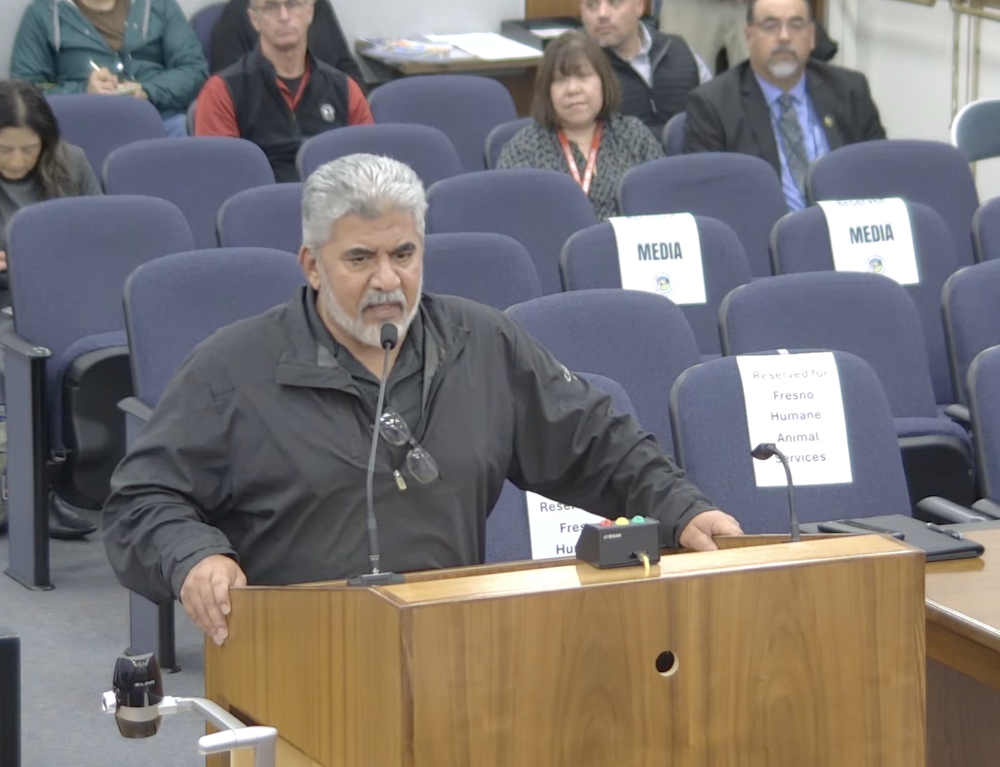
Chuck Riojas, secretary-treasurer of the Fresno, Madera, Tulare, Kings Building Trades Council, told supervisors the item would only start negotiations and would not approve or reject a PLA.
“PLAs, they get misunderstood in a lot of ways,” Riojas said. “It lends structure to an unstructured industry, which is the construction industry.”
Riojas said the Fresno City Council voted 6-1 last Thursday to approve a successor five-year agreement with the trades council. He said more than 200 community members entered joint labor-management apprenticeship programs under the city’s agreement over the last five years. He said the council is also working with State Center Community College District on a project labor agreement.
Would non-union contractors be shut out?
Riojas said no. He said the council does not negotiate union-only agreements and has completed three with Fresno Unified School District in which the general contractor was non-union.
“I invite participation by all segments of the contracting community,” Riojas said.
He said reaching an agreement takes months, and that the trades do not depend on one.
“It doesn’t make or break the trades to do PLA. We are busy. We will always be busy,” Riojas said.
Who opposed it, and why?
Speakers opposing the agreement included Clint Olivier of BizFed Central Valley and Rex Hime of the Western Electrical Contractors Association. Representatives of Associated Builders and Contractors Northern California and Rex Moore Electrical Contractors also spoke against it.
Olivier said free and open competition gives every qualified contractor a fair shot.
Opponents said PLAs raise construction costs and exclude non-union workers, who must still pay union dues on projects under some agreements.
Eric Christen, executive director of the Coalition for Fair Employment in Construction, said PLAs favor the 10% of the labor force that is union at the expense of the 90% that is not. Christen said the City of Fresno’s agreement has failed to deliver because most of the local workforce is non-union, and that it excludes non-union, state-approved apprentices from building projects.
What else is competing for county money?
Magsig said the county may need to cannibalize budgeted projects in the next few months to pay for others. He pointed to a parking garage fix estimated at $12 million to $14 million and the move of the county administrative office and sheriff’s office to a building at O and P streets by May 2027.
What happens next?
The item returns in January before the newly seated board, along with staff’s analysis of the net county cost for negotiations.