File photo
Written by Dylan Gonzales
Editor’s note: The Business Journal published its 2026 Regional Economic Forecast issue on Nov. 28. This is one of those stories.
After a year of several large groundbreakings for industrial warehouses, new affordable housing communities and additional development to growing areas, Fresno County is set to carry that momentum into 2026.
Fresno County’s housing pipeline
Fresno County is preparing for a big year of affordable and mixed-use housing in 2026, with nearly 300 new or rehabilitated units moving into construction or opening over the next year, according to Fresno Housing CEO Tyrone Roderick Williams.
“We’ve got four that are definitely going to be either completed or started in 2026,” Williams said.
The four include Mosaic in the Mural District with 25 units, expected to open next year; the 45-unit Avalon Commons II at Chestnut and Alluvial in northeast Fresno, set to break ground in March; Garland Gardens, a 51-unit rehabilitation beginning construction in April; and Davu Village, a 63-unit adaptive reuse project across from the Fresno Chaffee Zoo that recently secured final financing.
Fresno Housing is also preparing for additional developments in the next few years including, The Lofts at Fulton Forum in Downtown Fresno and projects in San Joaquin, Firebaugh and Kerman. Williams noted that Fresno Housing is “actively always looking at new opportunities.”
Another goal of Fresno Housing is to bring income-restricted housing into traditionally higher-income areas like north Fresno.
“A lot of affordable housing often gets relegated to areas of town where rents are lower, but we recognize the importance of equally distributing housing options throughout the city, including areas that where it hasn’t traditionally existed,” he said.
Challenges such as current economic conditions continue to complicate development planning.
“Construction costs continue to fluctuate,” Williams said, with tariffs, interest rates and lower tax credit pricing all influencing feasibility.
He said Fresno Housing is focused on designing projects that are both cost efficient and sustainable.
Despite a challenging 2025, Williams remains optimistic, citing Fresno Housing’s long history of working in Fresno County.
“We are committed to delivering quality housing and we intend to be around for another 85 years to meet the needs of our communities and our residents.”
Migration shapes demand
The Central Valley housing market in 2026 will continue to be driven by migration from the coast, according to Joanna Odabashian, CEO of Keller-Williams.
Although the rate of migration is expected to stabilize in 2026, the volume of buyers moving inland to the Central Valley will remain strong due to the affordability gap. The statewide median home price is near $905,000, compared with prices in the low $400,000s across much of the Central Valley.
Odabashian forecasts modest price appreciation in Fresno and nearby cities next year as mortgage rates trend toward 6 percent. Improving borrowing conditions and continued demand are expected to keep pricing firm without escalation. Inventory may loosen slightly, but analysts say the “lock-in effect,” which is homeowners holding onto low pandemic-era interest rates, will continue to restrain supply, mainly at the entry level where competition remains most intense.
Two demographic groups are reshaping buyer dynamics. Coastal buyers often arrive with higher home equity, giving them a competitive advantage over local working families. At the same time, the age of the first-time buyer is increasing.
Although estimates vary depending on survery’s, the National Association of Realtors says the median is at 40, while some surveys place it closer to 33. Most researchers agree that younger households are entering homeownership later due to affordability pressures and having to pay off student debt.
Odabashian said policy battles will continue to define supply in the area. Fresno’s proposed Southeast Development Area (SEDA), which could bring 45,000 new homes, faces environmental and financial opposition.
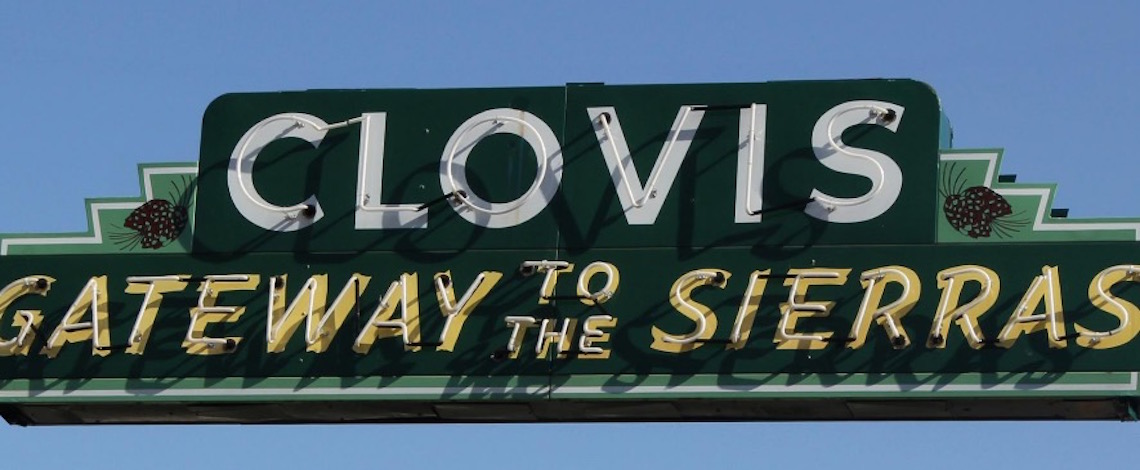
Clovis business leaders look toward greater stability in 2026
As 2025 comes to an end, Clovis business leaders are preparing for what they hope will be a more stable economic landscape in 2026, according to Greg Newman president and CEO of the Clovis Chamber of Commerce.
Newman said the chamber is very optimistic about 2026, highlighting the second year of President Donald Trump’s administration.
“There will be a little more certainty, hopefully in the economy, that will allow people to start spending,” he said, noting that inflation and other pressures will ease as business continues to grow.
Much of the chamber’s recent work in 2025 has focused on helping local businesses respond to increasing legislative demands from the state. Newman said that several businesses have voiced their concerns about the legislation coming down from Sacramento and how it impacts Clovis businesses.
Newman and the chamber have advocated for local businesses to make sure “local leaders are still in control of a lot of the things that are happening in our community” instead of relying on statewide requirements.
Newman said that the Central Valley and Clovis views itself as distinct, saying the chamber is committed to helping “govern our community, within the leadership within our local community, as much as we can without having to to adhere to state mandates in some areas that we feel we have probably a better idea of how to govern.”
Looking ahead to 2026, smart growth planning remains a key priority for Clovis. Newman pointed to continued development in areas such as Loma Vista.
As 2025 closes, Newman said the chamber is looking for greater economic stability that will help businesses and consumers “feel confident in buying things and, you know, doing services, new projects, all those things.”
Related Posts
-
 Who’s driving? Fresno gig workers push for rules on driverless cars Posted: March 25, 2026 at 2:57 pm
Gig workers and labor organizers gathered at Fresno City Hall
Read more » -
 Fresno State changes its sports marketing model after decades Posted: at 2:52 pm
Fresno State Athletics announced the launch of Bulldog Sports Enterprises,
Read more » -
 Fresno staffing firm partners with EDC to place workers at no cost to employers Posted: at 12:25 pm
Denham Resources, a leading staffing and human resources consulting firm
Read more » -
 Valley Children’s new pediatric residents through national match Posted: March 24, 2026 at 3:55 pm
Valley Children’s Hospital has welcomed 14 new physicians into its
Read more »
Central Valley Biz Blogs
-

BLOG: The Central Valley — California’s manufacturing bright spot
Posted: March 13, 2026 at 2:07 pm
If you follow the headlines, you might conclude that manufacturing
Read more » -

BLOG: California’s tribal casinos trample smaller cardrooms with new regulations
Posted: March 11, 2026 at 9:18 am
While writing a book about California politics a quarter-century ago, I devoted
Read more »