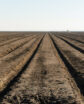
Some $11 billion of $12 billion promised to farmers in the U.S. is slated for row crops such as corn that aren't predominately grown in California. Photo by Waldemar Brandt on unsplash.com
Written by Frank Lopez
Billions of dollars are headed to struggling farmers impacted by market disruptions.
Last week, The Trump Administration announced the U.S. Department of Agriculture (USDA) will make $12 billion available in one time bridge payments to American farmers in response to trade disruptions and increase production costs.
Out of the $12 billion in funding, $11 billion will go to row crop farmers, with $1 billion going to specialty crop farmers.
The $11 billion will be used for the Farmer Bridge Assistance (FBA) Program, providing broad relief to U.S. row crop farmers who produce such crops as barley, corn, cotton, wheat and canola.
Farmers who qualify for the FBA Program can expect payments to be released by Feb. 28, 2026, according to the USDA website.
The remaining $1 billion in bridge payments will be reserved for commodities not covered in the FBA Program such as specialty crops, including fruits, nuts and vegetables. Most of those crops are grown in California.
While the $12 billion might be a relief to some farmers, particularly to row crop farmers, it could be less impactful for famers in California and the Central Valley.
Ryan Jacobsen, CEO of the Fresno County Farm Bureau, said this funding will have a minor effect on California agriculture.
“The initial funding is not going to be significant in California, but with the $1 billion that’s been held back, it’s our hope that even though there is not a timeframe that has been announced yet, that there is a time frame that will be accelerated and that we will see that in the next few weeks,” Jacobsen said.
Jacobsen noted that earlier this year there was $1.8 billion set aside for a marketing assistance for specialty crops program, which was very helpful for many California farmers and other specialty crop producers.
However, he said farmers are still thankful that $1 billion of the $12 billion in assistance.
While Trump’s tariffs on agricultural goods might be dominating headlines, the challenges also come from higher input costs, below average market prices, higher interest rates and an overall difficult trade environment post Covid.
“This funding has definitely helped, but it’s not going to necessarily do all that has taken place, but it does help farmers bridge the gap between now and next year’s crop,” Jacobsen said.
Related Posts
-
 Federal investment to enhance San Joaquin River public access Posted: February 17, 2026 at 3:01 pm
Fresno City Council President Mike Karbassi and Rep. Jim Costa
Read more » -
 Westlands board clears path for massive Valley clean energy project Posted: February 9, 2026 at 4:43 pm
The Westlands Water District Board of Directors has certified the
Read more » -
 World Ag Expo returns to Tulare for 59th year Posted: at 3:42 pm
The world's largest annual outdoor agricultural exposition is set to
Read more » -
 RANKED: The end of the mega farm sales? Posted: February 5, 2026 at 10:39 am
The Central San Joaquin Valley's agricultural real estate market in
Read more »
Central Valley Biz Blogs
-

BLOG: For the Central Valley, policy must work in practice — not just on paper
Posted: February 18, 2026 at 2:41 pm
For the Central Valley, Sacramento is not abstract. State policy
Read more » -

BLOG: Hobby Lobby called California “off limits” — then Visalia broke sales records
Posted: February 17, 2026 at 8:22 am
When Hobby Lobby decided to open its first store in
Read more »