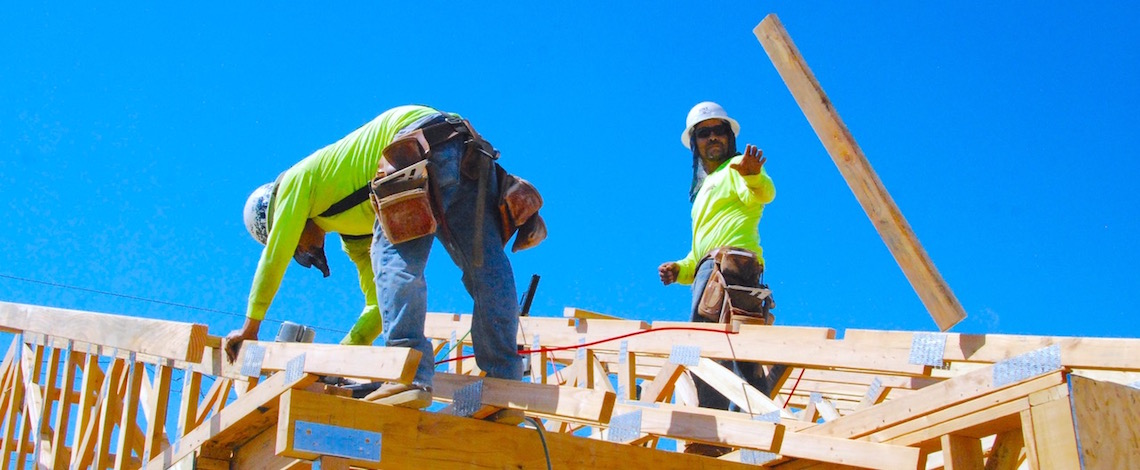
File photo
Written by Dylan Gonzales
It’s no secret that one of the largest issues facing the Central Valley and the rest of the nation throughout 2025 has been housing affordability, as demand continues to outpace supply.
The Center for California Real Estate (CCRE) hosted a panel on Oct. 16 in partnership with the Fresno State Gazarian Real Estate Center, discussing the Central Valley’s housing challenges and the important role that Realtors play in shaping policy and market dynamics.
Tamara Suminski, president of the California Association of Realtors, opened the discussion by highlighting California’s market trends.
“Data from CAR’s monthly home sales and price reports shows that statewide home sales edged up nearly 1% in August from July, as mortgage rates fell to their lowest level in a year, while the median home price held steady at just under $900,000,” Suminski said.
However, sales declined by 3.5% year-over-year in the Central Valley, although strong pending actively shows potential for more stabilization.
Fresno Mayor Jerry Dyer discussed the demand led affordability crisis.
“The demand has far exceeded the supply here in Fresno,” Dyer said, noting more and more residents from coastal areas like the Bay Area and Los Angeles moving to Fresno, particularly post-pandemic.
Joanna Odabashian, the CEO of Keller-Williams, attended the event and shared her thoughts on more people moving to Fresno and the Central Valley from out of the area.
“Their money goes farther here, and they make more [at their jobs in larger cities]. And so they think, ‘Oh, we can come here and get a very nice home for a lot less, and many of them are allowed to still do remote work,” she told The Business Journal.
Dyer also noted that Fresno’s proximity, lifestyle and affordability have fueled migration, but high energy costs don’t help some of the issues.
“Energy rates here in Fresno, in the Valley, are 80% higher than anywhere else in the nation,” he said, adding that PG&E rates have risen over 50% in recent years.
Earlier this year, at the Fresno County Economic Development Corp. real estate forecast, Dyer had a discussion with PG&E CEO Patti Poppe regarding infrastructure improvements, partnerships and ongoing efforts to rebuild trust with Fresno residents and officials.
“One of the biggest drivers of our bills going up was the need to harden our system to wildfire and other extreme weather, not just wildfire, but extreme rains, extreme winds, extreme snow up in the Sierras,” Poppe said in an interview with The Business Journal following the event. “We are building infrastructure, transforming our infrastructure so it’s fit for purpose. It’s an important investment to make, but that investment will have returns over decades to come while we continue to reduce the cost to maintain that equipment every single year.”
Dyer touched on Fresno’s increased efforts to address the housing crisis through the One Fresno Housing Strategy, which includes 47 action-oriented initiatives
“We’re almost done with all 47 strategies,” he said, noting a 144% increase in affordable housing units planned for 2026 compared to prior years.
However, he stressed the need for balance, noting the need for market-rate housing in addition to affordable housing.
“Affordable housing doesn’t pay the bills. We don’t get property tax from it. We have to have market-rate housing,” Dyer said, advocating for policies that support homeownership as “the best form of rent stabilization.”
Carol Ornelas, president and CEO of Visionary Home Builders of California, noted the rising costs of construction and insurance as major hurdles.
“One of the biggest things today that’s affecting [housing] is, how much does insurance cost?” Ornelas said, noting that course-of-construction insurance has surged from $300,000 to $1 million for a two-year period due to fire risks and other factors.
She also highlighted labor shortages and tariffs as challenges, stating the need for community engagement, while giving a call to action to Realtors and community members.
“We need everybody in this room to get on a table when it’s talking about your community and your needs, because the Central Valley’s been pretty well neglected for a very long time,” she said.
Bernadette Austin, CEO of Civic Well, a Sacramento-based nonprofit that works with community leaders on sustainability, pointed to the economic and demographic shifts driving housing pressures.
A research project she led found that post-pandemic migration to the Central Valley was driven not only by affordability but also by housing stock availability.
“People were moving… because they needed more affordable housing… [but also for] the availability of housing stock. How big were the homes? Were their kids able to have their own bedrooms?” Austin said.
Related Posts
-
 Fresno County supervisors propose ordinance to curb clustering of sex offenders in single-family homes Posted: December 5, 2025 at 3:05 pm
Fresno County Supervisors Garry Bredefeld and Brian Pacheco will introduce
Read more » -
 Hyatt House opens at Campus Pointe, completing two-decade master plan Posted: at 1:27 pm
Campus Pointe is fulfilling its original master plan with the
Read more » -
 Six-hour live broadcast to celebrate 20 years of local show Posted: at 12:04 pm
A Central Valley television broadcast that began as a Saturday
Read more » -
 With final court dismissal, Fresno’s smoke shop culling to proceed Posted: December 4, 2025 at 3:33 pm
A majority of smoke shop owners in Fresno will have
Read more »
Central Valley Biz Blogs
-

BLOG: PAGA reforms deliver results 18 months in
Posted: December 5, 2025 at 4:29 pm
California businesses finally caught a break last summer when Sacramento
Read more » -

BLOG: Assembly Speaker Rivas promises to scrutinize how California’s new laws work
Posted: at 9:54 am
The California Legislature not only habitually passes legislation without considering
Read more »